
Teramo and Giulianova A day on the Adriatic side.
Teramo is a beautiful town, still little included in tourist itineraries
A day in the Adriatic Abruzzo in the name of good food. Teramo’s cuisine is considered, parochialism aside, the best in the region, and in Giulianova, on the coast, there is excellent seafood. It’s up to you to decide how and where to have lunch and/or dinner.
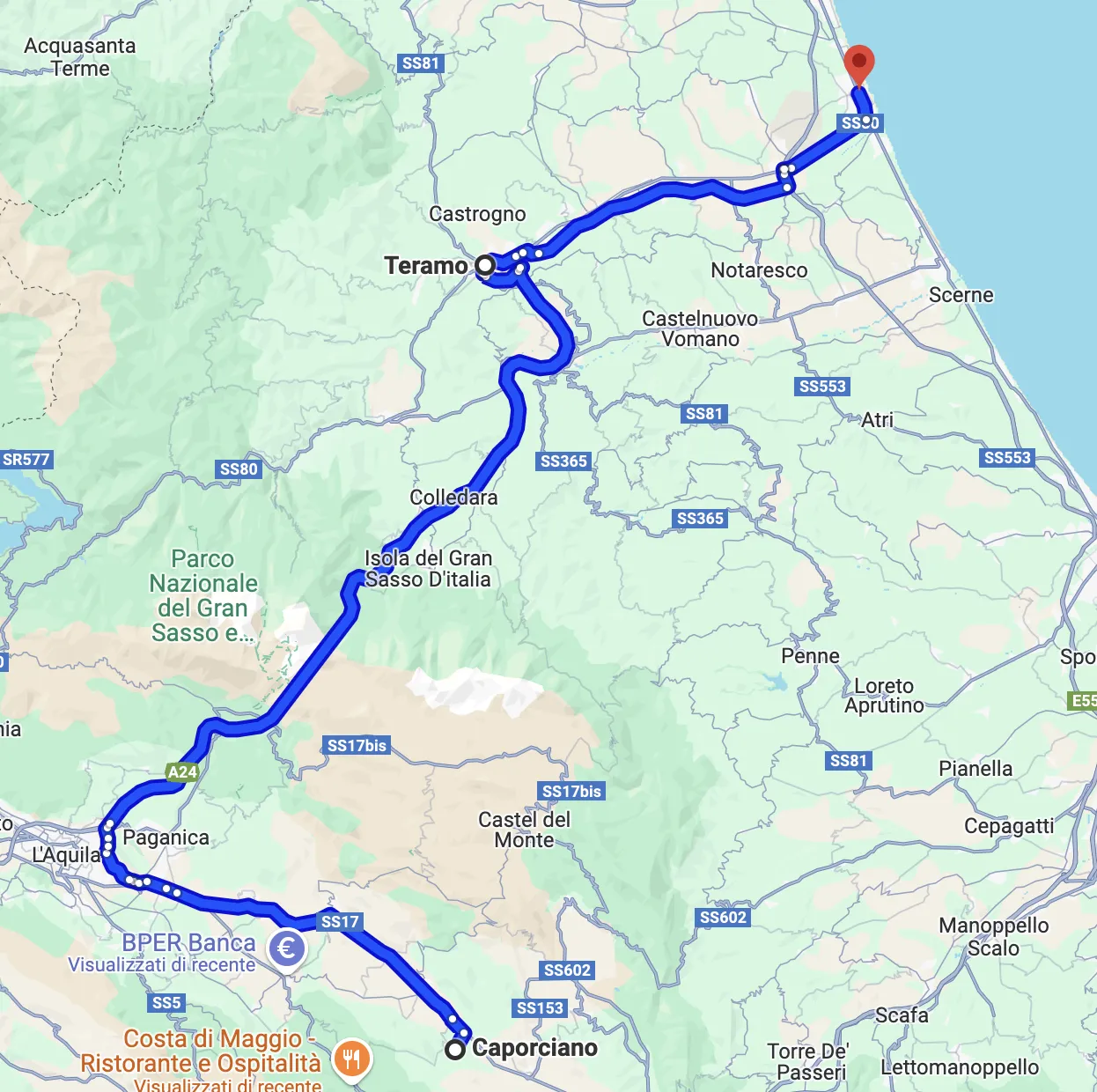
Teramo can be reached by car from Caporciano in about an hour, driving back toward L’Aquila, entering the A24 at Aquila East and passing under the “famous” Gran Sasso tunnel, where you will notice the underground access to the physics laboratories. On the way out is an exceptional view, with the sheer mountain face.
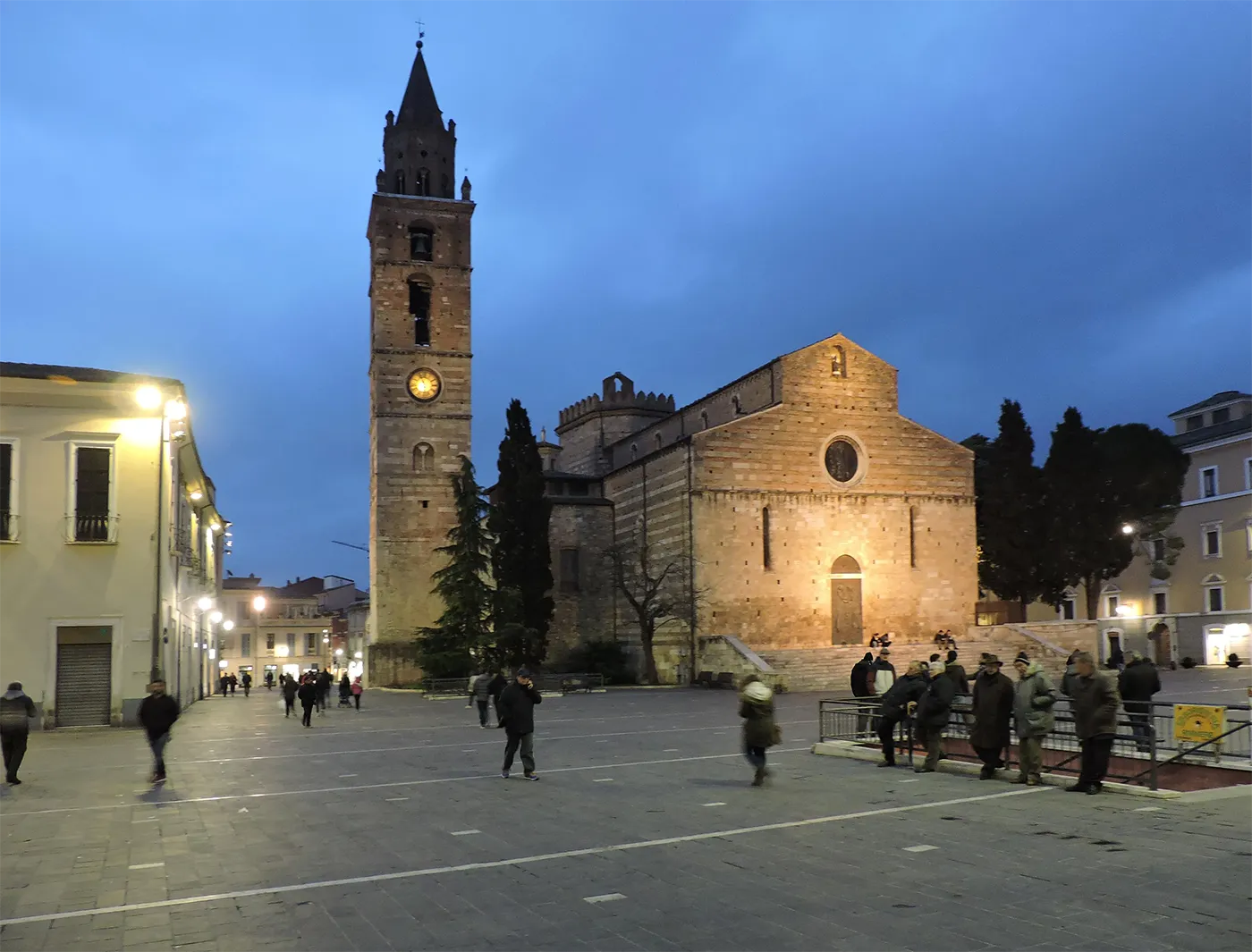
Teramo is a beautiful town, still little included on tourist itineraries. It actually has much to offer, starting with its distinctive double-fronted cathedral, ancient Roman theater, archaeological excavations and beautiful buildings in town.
Martiri della Libertà Square is the heart of the historic center. It is overlooked by several important buildings, including the city cathedral, the bishop’s palace, the diocesan seminary and the Costantini Pompetti palace.
Next to the cathedral stands the bishop’s palace of Teramo. Although its main facade is well-plastered, its origins are between the 13th and 14th centuries. While on Martiri della Libertà Square one notices the beautifully preserved 14th-century loggia, and reaching Orsini Square is the portico of the Episcopio: stone pillars supporting pointed arches that bear witness to the city’s medieval appearance.
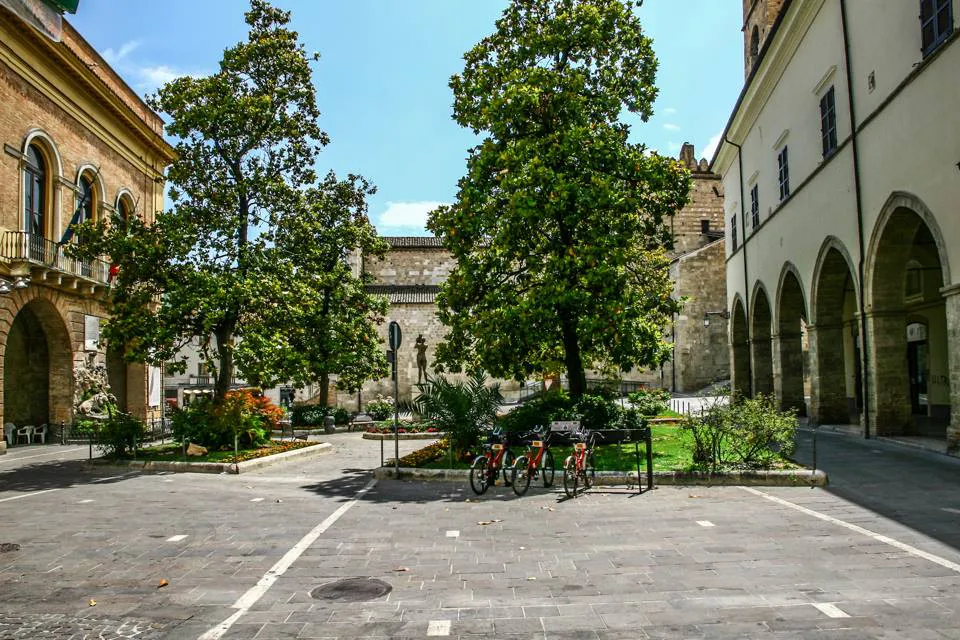
When you reach Orsini Square you will see the fountain of the two lions. Leaning against the portico of the town hall and protected by a metal railing, it dates from the years between the late 19th and early 20th centuries.
Its construction celebrated the expansion of the water supply of the city of Teramo and features two lions against a background of rock and vegetation, placed above the oval basin. The lions represent the Vezzola and Tordino rivers that enclose the first settlement of the city of Teramo.
We leave the center of Teramo through Porta Melatina. This gate is as old as the important old building that encompasses it. The Porta Melatina complex dates back to 1323 and represented the main psychiatric hospital in central southern Italy for several decades.
Next to Porta Melatina is also Porta della Recluse, which enters the center through the vico delle Recluse. This entrance dates back to the 14th century and owes its name to the female wing of the hospital housed here.
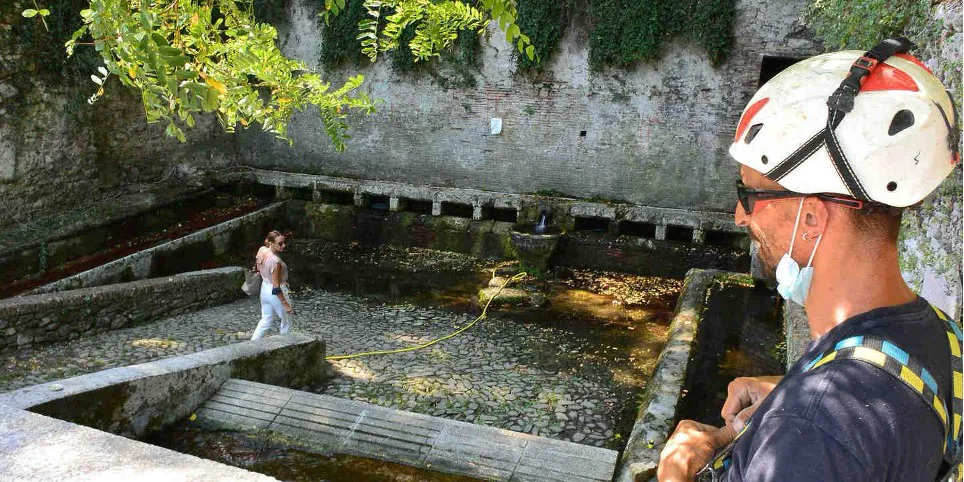
The Fonte della Noce stands on the street of the same name, and is generated by the Vezzola River. The fountain system, which is still visible, was built in medieval times to distribute drinking water in the city. This spring served the city until the 1930s to distribute drinking water throughout the northern area of Teramo. Its name is linked to the numerous walnut trees that have been present in its vicinity for centuries.
Along Corso Carlo de Michetti is a low succession of stone ogival arches. These are the remains of ancient dwellings from the medieval period of the 14th century. In the 18th century, they were grouped into a single complex known as Bonolis House.
The arches represent the part of the ground floor that faces outward, while the rest of the house changed shape several times. In the 1960s, however, the city administration decided to tear down Casa Bonolis to build a more modern building. In the unfortunate choice, at least, they left standing the arches that can still be seen today.
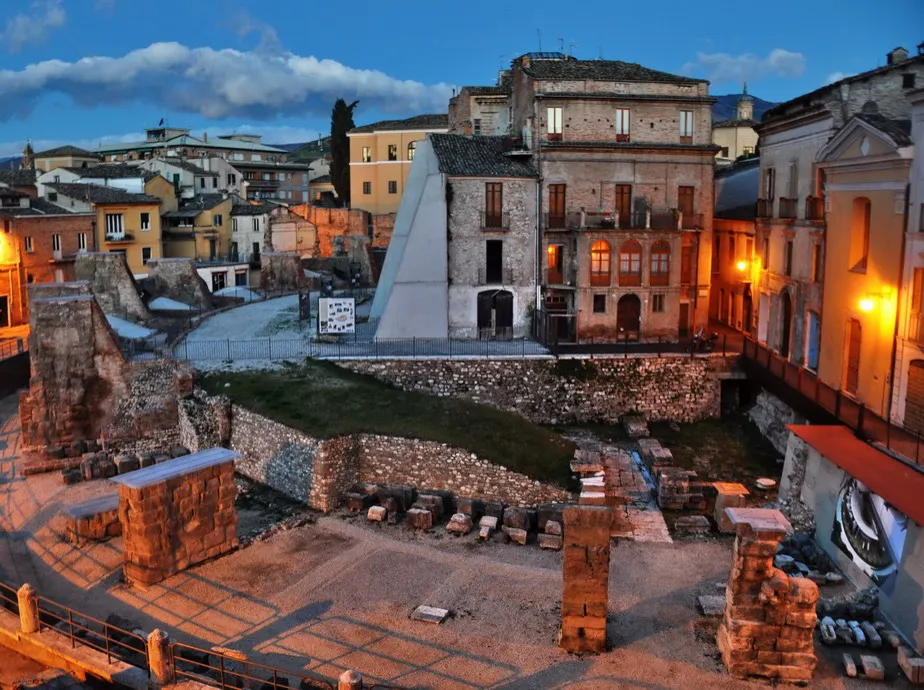
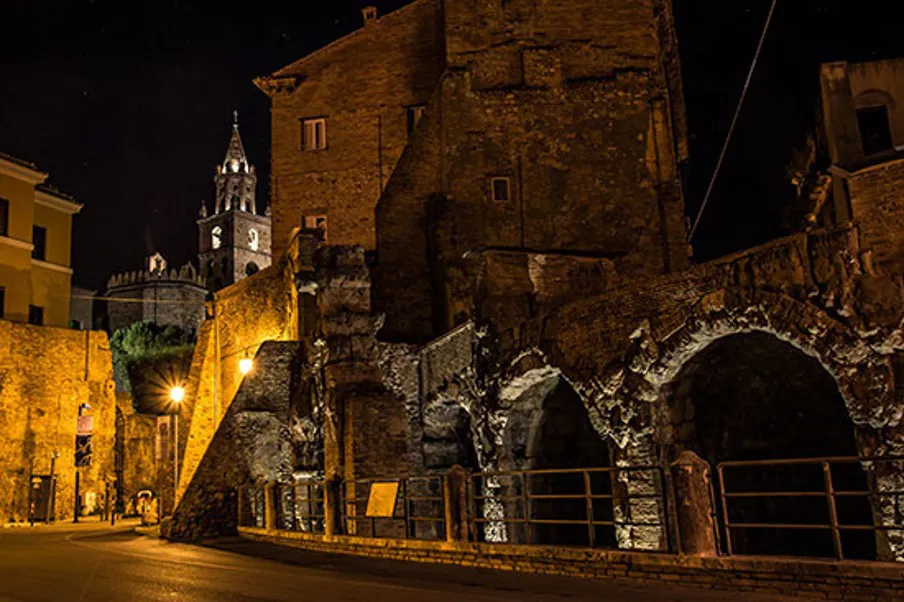
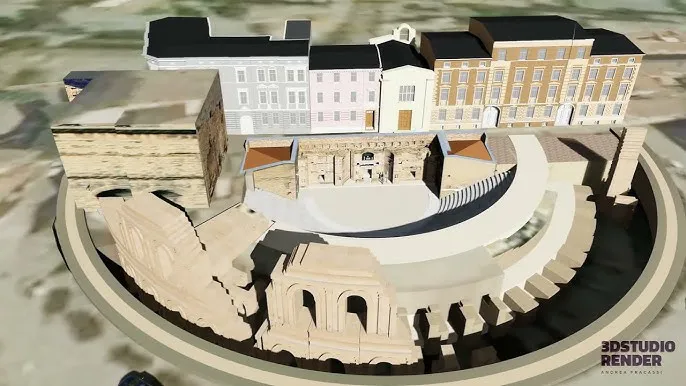
What not many people know is that when visiting the center of Teramo one comes across an actual Roman theater, flanked in turn by an amphitheater. What is now the heart of the historic center, at the time the theater was built, was only the marginal part to the west. In fact, the theaters were built outside the center, so that the many people who poured into them could easily reach them without getting in the way of other city traffic.
Over the centuries the structure was incorporated into other buildings, and it was not until 1926 that the slow process of bringing back what has come down to us began.
A very short distance from the Roman theater are the remains of the amphitheater. This is more recent, dating in fact from the 1st century AD and had an elliptical shape with a perimeter of as much as 208 meters. Along the walls, partly encompassed by later buildings, it is possible to discern the curvature of the amphitheater, the various entrances and some original architectural elements.
The proximity between the two structures made scholars think until 1926 that both were part of a single element. In fact, more recent studies have shown that the amphitheater fulfilled the role of a fortress, as evidenced by the military tunnels found in its subsoil.
The Roman amphitheater was also plundered to build nearby buildings, including Teramo Cathedral.
A Roman house and former city basilica is located in St. Anne’s Square. The house, whose basement and mosaic flooring can be seen mainly, dates back to the 1st century B.C. and is 90 centimeters lower than the other findings. This means that there was a progressive stratification of the soil at different periods.
And these are just some of the buildings to see!
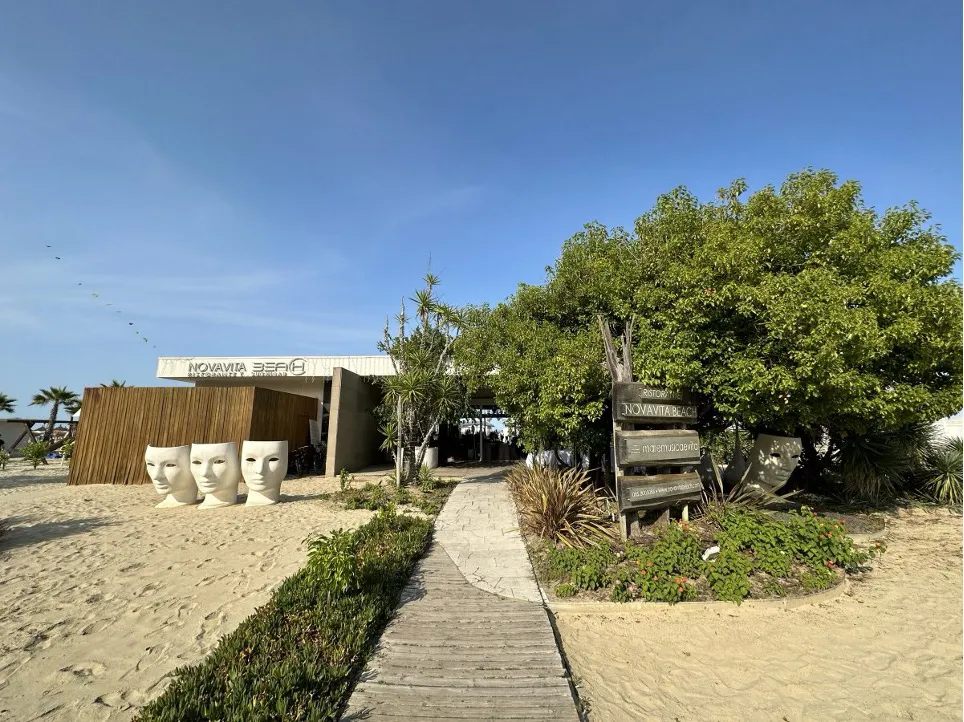
For the evening, especially after a long summer day, I recommend going down to Giulianova and enjoying first an aperitif and then a great dinner on the beach at Novavita Beach, a fine restaurant that also has beach service.
USEFUL INFO.
- Inquire about the opening status of the tunnel. In case of closures or traffic delays due to works, you can extend slightly by taking the A25 at Bussi and at Pescara for a short distance the A14
REFERENCES
Novavita Beach
Lungomare Zara, 55, 64021
Phone: 085 800 5086

Whether you choose one of our suites or one of the apartments, Palazzo D’Alessandro welcomes you with harmonious spaces, refined atmospheres and an elegance that accompanies every moment of your stay.

